
Start Investing Small Amounts — How Even $50 Can Lead To Financial Success
Learn how to start investing small amounts and build your wealth over time. Discover practical tips for beginners, from low-cost index funds to fractional shares. Gain financial confidence and take control of your money with step-by-step guidance for long-term financial success.
10/25/20253 min read


Why Starting Small Is a Smart Move
Ever feel like investing is only for people in suits sipping lattes while checking their stock charts? Think again. You don’t need thousands of dollars or a Wall Street office to start investing — Even a teen starting a simple side hustle can begin investing with just a few dollars,you just need a few bucks, a plan, and a bit of patience. In fact, starting with as little as $50 a month can slowly but surely grow into something big.
Let’s say you invest $50 every month into a low-cost index fund. Over time, that money doesn’t just sit there — it works for you. Thanks to compound growth, your returns earn even more returns, kind of like a snowball rolling downhill. It might start small, but give it time and it becomes unstoppable.
If you invested $50 monthly with a 7% average yearly return, you could end up with around $30,000 after 20 years — not bad for skipping a few takeout meals a month. Starting small also means less stress. You can learn the ropes, make mistakes, and improve your skills without worrying about losing large sums of money.
And here’s a bonus: starting early gives your money more time to grow. Waiting for “the perfect moment” is like waiting for the Wi-Fi to get faster — it probably won’t. Start now, even if it’s small, and future you will thank you.
The Power of Consistency and Compound Growth
Compound growth is like planting a tree — at first, it’s tiny, but with care and consistency, it grows strong roots and branches. The same goes for your money. Investing $50 every month might not sound like much, but those small seeds add up.
Here’s a fun comparison:
Start investing $50/month at 25, and by 45 you could have around $30,000.
Wait until 35 and start with $500/month, and you might still end up with less.
So, the secret isn’t having tons of cash — it’s being consistent. Small, regular contributions beat big, occasional ones almost every time.
Practical Tips to Get Started
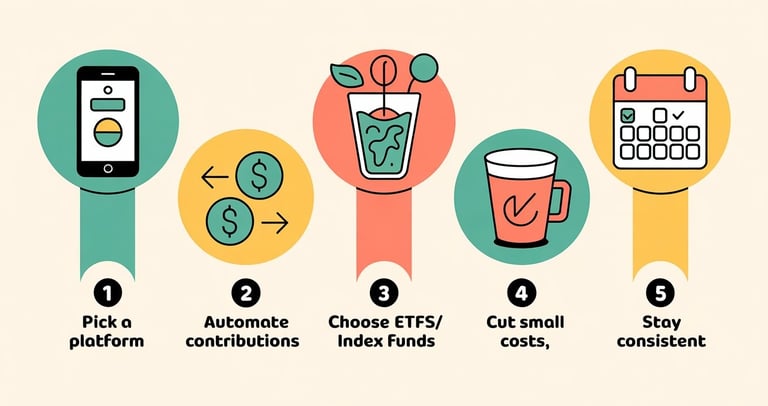
Pick the right platform – Use an app or broker that lets you invest small amounts or even buy fractional shares. Don’t pay high fees — they can eat into your gains like hungry termites.
Automate it – Set up an automatic $50 monthly transfer. This builds the habit and saves you from “forgetting” to invest when that new video game drops.
Go for ETFs or index funds – They’re like smoothie mixes of stocks — diverse, simple, and good for beginners.
Cut tiny costs – Skip that one expensive coffee a week and boom — you’ve got your $50.
Staying Motivated and Overcoming Fears
Let’s be honest — investing can feel intimidating. Everyone worries about losing money. But here’s the truth: every investor loses sometimes. Even the pros! What matters is staying calm, diversifying, and learning as you go.
Don’t drown in financial jargon either. You don’t need to know what “quantitative easing” means to grow your money. Start small, watch YouTube explainers, join online investing groups, and ask questions. Everyone starts somewhere.
Set clear goals — maybe you’re saving for a trip, a car, or your future self’s peace of mind. Celebrate small wins along the way. And when things get confusing, laugh it off. Even Warren Buffett had to start with his first $100.
Final Thought
You don’t need to be rich to start investing — you just need to start. $50 a month might not sound like much, but give it time and consistency, and it could turn into something incredible. Remember, the goal isn’t to get rich overnight — it’s to build wealth over time.
So grab your financial watering can, plant that $50 seed, and let compound growth do the rest!




Inspiration
Empowering your journey to financial freedom.
Contact us
Explore
contact@thirst4success.com
© 2025. All rights reserved.
Disclaimer: The information provided is for educational and informational purposes only and should not be construed as professional, financial, investment, or legal advice. You should consult with a qualified professional before making any decisions based on this information. We make no guarantees about the accuracy, completeness, or suitability of this content for your particular situation. Use of this information is at your own risk.